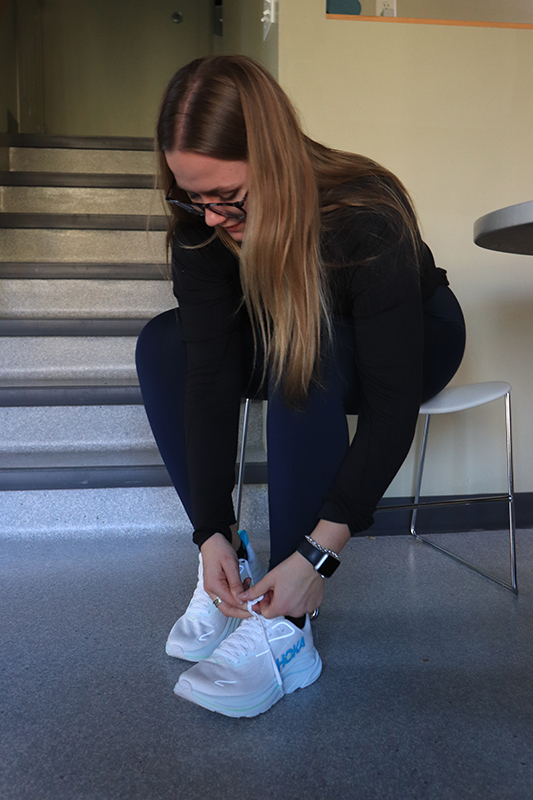

College life is full of exciting opportunities however it can be demanding and overwhelming. Between classes, assignments and maintaining a social life, physical exercise is often hard to integrate within the college experience. Staying active is crucial not only for your physical health, but your mental well-being and academic performance. Here are some realistic ways to stay active as a college student without the added pressure to your schedule.
- Utilize campus recreation facilities
Most Universities and colleges offer great athletic facilities. Take advantage of what these recreation facilities have to offer such as the gym spaces and fitness classes designed for students. Diane Gallagher, projects coordinator for the Be Fit for Life Centre at Lethbridge Polytechnic, says fitness classes can be a good start for physical activity. “We offer fitness classes, which is a great way to add activity and being registered for a class can make people more likely to do it because you’re committed.” Simply sign up for a class that you’re interested in to get a head start on your fitness journey. Another option is using the gym space to workout on your own time that way you can easily fit into your schedule. Harley Taylor, a student at Lethbridge Polytechnic is in the medical office assistant program and she says that she takes advantage of the recreational services on campus. “I try to go to the gym three times a week,” This fits into her schedule and it’s what’s best suited for her. She adds that it improves her mental health. “I force myself to go to the gym everyday and make it work because it makes me feel so much better.” Taylor says it’s worth it even though it can take some effort to get there. Find what your school has to offer for recreational services and try to implement it into your routine.
- Walk whenever you can
As simple as it may sound, walking is a great way to stay active. On campus you don’t really have a choice when you have to get to your classes. Gallagher says that there are more ways to get your steps in. “Taking walking breaks between your classes or if you live off campus try increasing your active transportation. For example if you take the bus, you can get off at a bus stop a little further and walk.” This is a perfect way to increase your steps and physical activity. Taylor says making small choices to incorporate more walking add up. “Everyday I walk to class so that makes a big difference and sometimes when I’m out groceries I’ll park further away so that I can get my steps in.” It’s simple choices like these that can help you get some physical activity.
- Incorporate movement in your study schedule
It can be draining staring at a laptop for hours and sitting all day. Simply adding movement into your study schedule is a great way to boost productivity and reduce stress. Gallagher recommends consistent mini-breaks in between study sessions. “Take breaks throughout the day to move your body even while you’re studying to improve your cognitive function.” It does not have to be complicated, it can be a short five minute walk, stretch or a set of exercises like jumping jacks. Taylor adds that if she can’t make it to the gym, she’ll use her breaks in between classes to move her body. “I try to get up and walk when I can, especially during breaks.” These short bursts of movement are not only good for your brain but can increase your mood.
- Build a workout routine you can do at home
For students who are on a tight budget, getting a gym membership may not be an option or maybe you prefer home workouts. Online options can be helpful especially if you are starting out. Gallagher says it’s a good starting point and it’s important to do some research. “There are lots of online resources. You just have to be careful that you’re selecting stuff that’s suited for the level you are at,” Do some research on what you like to do, there’s so many videos out there for workouts such as cardio, strength training, high or low intensity workouts and even pilates. Gallagher adds, “even just doing a little research on beginner home exercises could be a great way to start that journey.” Do what you’re comfortable with and make sure to find something you’ll enjoy.
- Find a workout buddy or include your friends in your physical activity
Sometimes we tend to separate our social lives from our physical activity, but why not include friends into staying active. You are more likely to stick to working out when you have a friend to join you. Gallagher says it’s a fun way to make working out enjoyable. “If you can plan to do stuff with your friends or family then that makes a difference because it’s fun and you look forward to it and are more likely to stick to doing it.” Even having that social accountability can help you stay consistent especially during the heavy part of the semester.
Overall, being active in college does not require dramatic lifestyle changes. By making small consistent changes over time, you are contributing to your physical and mental health throughout your post-secondary journey.