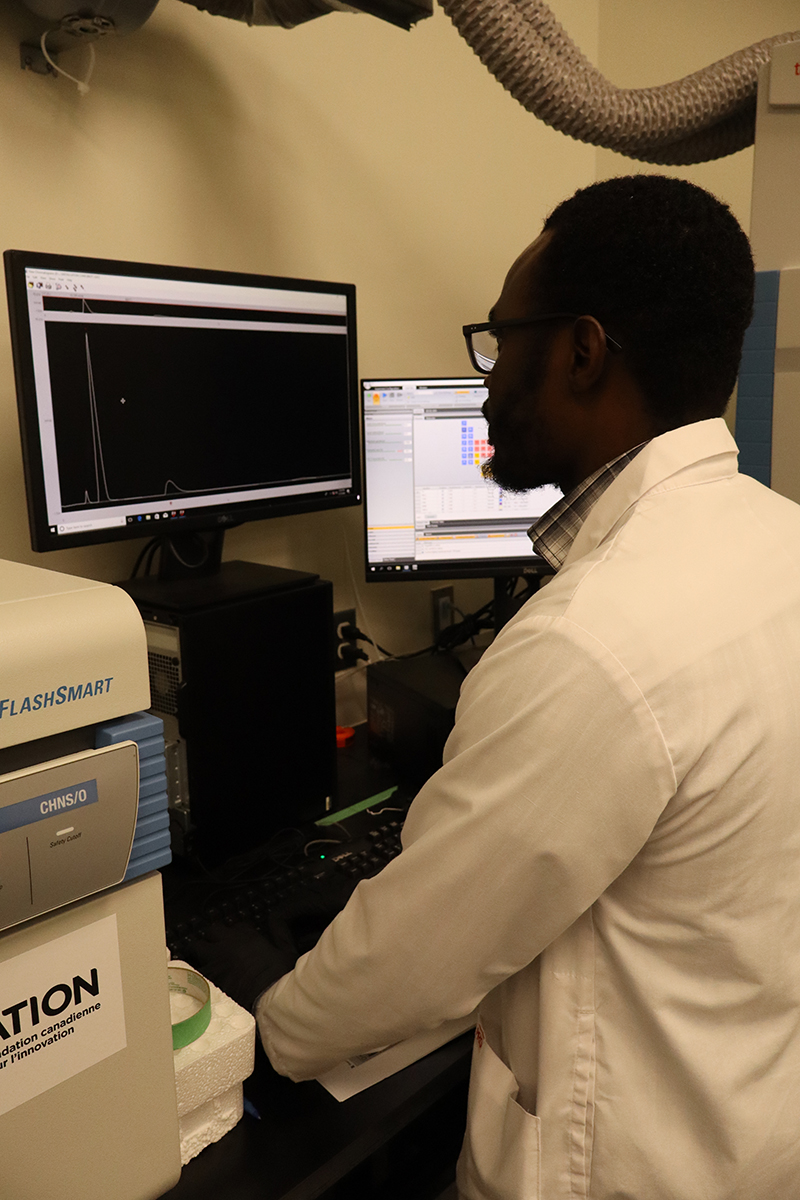
Emmanuel Nai holds a PhD in analytical and environmental chemistry. Nai is exploring sustainable fish-feeding practices at Lethbridge Polytechnic. Photo by Sophie Swanson Blackstock.
A Lethbridge Polytechnic researcher has been working on a way to make aquaponics more sustainable.
Aquaponics is a system where fish waste is used as fuel to grow plants and in return the plants purify water for the fish.
But fish feed that is often used in aquaponics is created using fish meal. This is unsustainable as fish meal is made of the same fish that aquaponics systems need to grow plants.
Emmanuel Nai, a research associate at Lethbridge Polytechnic, and his colleagues have started to experiment with replacing fish meal with canola meal. Nai says the project has shown some success.
“Initially we started off by replacing averagely about 30 per cent of the fish meal with canola meal. And we saw equal yield of growth [rate of fish] and plants with the same experimental trials,” said Nai.
Nai explained this means the fish were still able to grow at the same average rate even with the supplemented feed.
It was found the fish eating the canola meal retained more nutrients compared to fish that had the typical fish meal diet. This does not negatively impact the health of the fish. Nai noted the plants in the system with canola meal did not get all the nutrients they needed due to the extra nutrient retainment in the fish.
“When you see, for instance, the yellow colours of the lettuce […], it tells you that you are lacking iron in your system. So that confirms that the fish are retaining those nutrients instead of giving it out into the solution for the plants to pick it up,” said Nai.
To combat this, an external iron source can be added to the system to ensure iron levels are restored. Nai explained this is already a common practice.
It’s not just researchers like Nai who are able to experiment with Lethbridge Polytechnic’s aquaponics and greenhouse areas.
Lethbridge Polytechnic student Hailey Belisle is a second-year student in the agriculture sciences program. She is currently studying agronomy and has been involved with a few projects within her classes.
“For example, our fertilizer [project], we’re seeing how our pepper plants will grow in cattle manure versus how it’s going to grow in just soil, with nothing else. So, then we can understand how those nutrients from that cattle manure can help benefit the peppers that we are growing,” said Belisle.
The fish feed research is expected to conclude by the end of this fall.