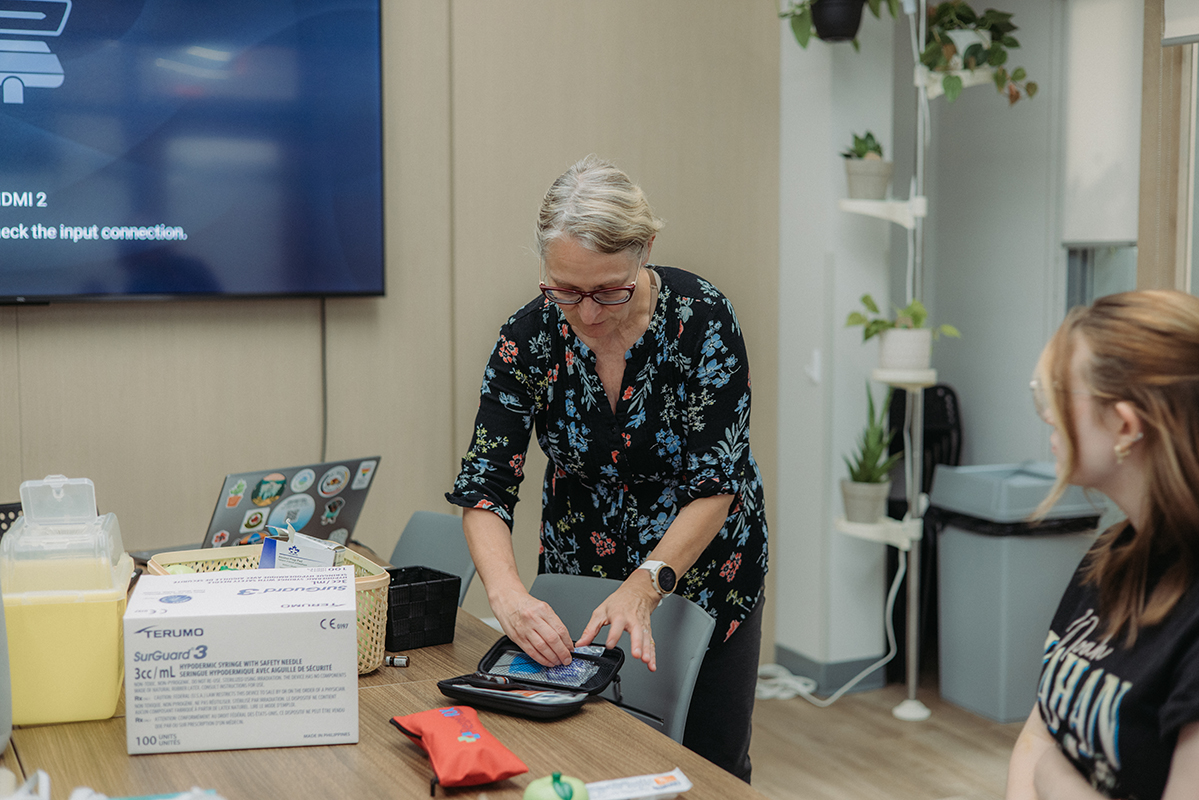
Wellness Services hosted interactive training sessions to help students understand how to recognize a drug overdose case. The lessons sought to equip students with knowledge on how to administer naloxone, a drug used to reverse the harmful effects of opioids.
According to an article on Low school belongingness and non-prescription opioid use among students in Ontario, Canada published in the Canadian Journal of Public Health by Shaezeen Syed on Jan.11, 2021, non-prescribed opioid use is associated with low school belongingness. During the fall semester, Lethbridge Polytechnic students were led through a hands-on training session to equip them with knowledge on how to assist people who have overdosed on the drug through the use of naloxone kits.
The medication, administered to patients as either an injection or nasal spray, has helped overdosed patients remain alive. Because of this success rate, it has become important to ensure college students can administer naloxone to protect their colleagues or anyone they encounter from dying.
The workshop included hands-on demonstrations, where students practiced filling syringes with water and injecting stress balls, thereby simulating real-life emergency scenarios in safely.
Lori Harasem, health promotion coordinator at Lethbridge Polytechnic, says these sessions give students confidence to act in the moment.
“A lot of students don’t even know what drugs naloxone works on,” said Harasem. “This training helps them understand the opioid crisis and gives them the tools to help someone, maybe even save their life.”
Students walk away from these sessions with a free naloxone kit and a certificate of completion, which Harrasem says is also a great addition to their resume. This is especially the case for those students seeking a career in social work, healthcare and law enforcement.

“There are programs here where students are likely to encounter substance use in their careers,” she said. “This shows future employers they already have experience in overdose response.”
Abha Thakur, the vice president of student life as well as being a psychology and sociology diploma student, attended the workshop not just as a student leader but also as someone who has already tried to save a life using naloxone.
“I came across someone downtown who had overdosed,” said Thakur. “I gave them the nasal naloxone, but sadly, it was too late. I always wonder what if I had gotten there five minutes earlier.”
Thakur believes training like this should be a priority for all students, regardless of whether they think they’ll ever need it.
“It’s better to have it and not need it than need it and not have it,” he said. “A life is always more important than your own comfort.”
An important aspect of this training is that students get to learn that naloxone is a safe drug even if it is used in error. It does not carry significant side effects that would threaten the life of the patient should they be suffering from an overdose that is not caused by opioids and they were given naloxone as an antidote.
These workshops offer a proactive solution as the opioid crisis continues to impact Lethbridge, which has the highest per capita overdose deaths in Alberta according to a June 2025 article in the Harm Reduction Journal. The best thing about this program, Harasem says, it has solutions for students who want to learn and are unable to be physically present in school.
“We do private group workshops for clubs or classrooms and students can always come into our office and pick up a free kit,” said Harasem. “We’ll walk them through how to use it.”
For many students, the training is also an eye-opening look at how widespread and personal the opioid crisis really is.
“A lot of people think overdose only affects people on the streets,” said Harasem. “But many people who overdose are students, parents, professionals, people who became dependent after an injury or prescription.”
Thakur said substance use can affect anyone under stress, and campuses should be prepared.
“We’ve had students at this school who’ve struggled with addiction,” he said. “As student leaders, it’s our job to be ready to help our peers.”
The naloxone training workshops will continue throughout the semester, and students are encouraged to register or inquire with Wellness Services. This program is proof that knowledge about naloxone can help save lives. The program also provides hope and encourages family members that all is not lost if their loved ones are struggling with opioid dependency.