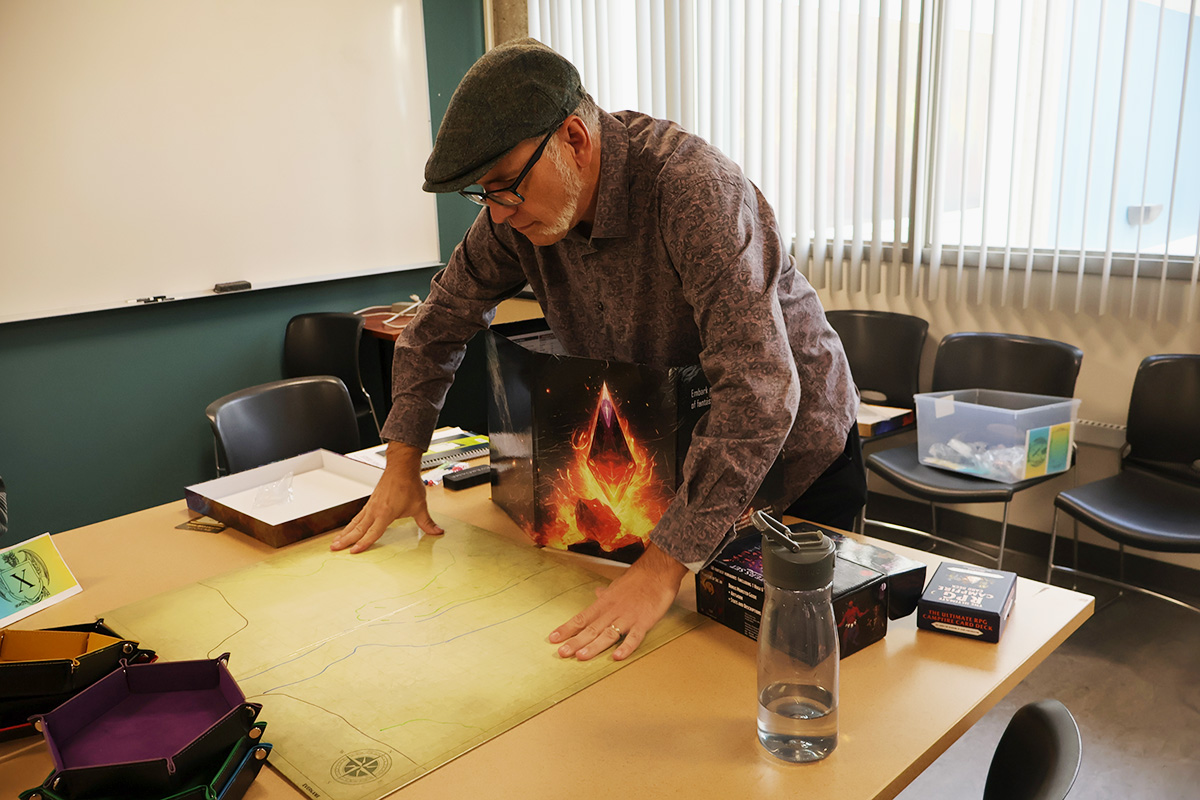
Steve Johnson, registered nurse and student support advocate, sets up for the Oct. 20 session at Lethbridge Polytechnic. Dungeons and Dragons Therapy uses the tabletop fantasy game to support mental wellbeing. Photo by Prom Zeppeli.
Lights are low but tensions are high as a d20 rolls across the table. The ragtag group of adventurers hold their breath as they wait for the polyhedral die to stop rolling.
The room is quiet – quiet enough that you could hear a pin drop and than the silence ends as roars of cheers and hollering – a natural 20.
While the adventurers are rewarded with gold and glory for their efforts, there is a deeper reward: confidence, self-assurance and most importantly, healing.
Counselors and mental health advisors at Lethbridge Polytechnic are helping students discover more about themselves by using a little imagination and Dungeons and Dragons.
“It’s a really easy way for people to both enjoy a nice game where they can drift off from reality and then also help fix their own issues in reality,” says Lyam Fortier, a First year multimedia student at Lethbridge Polytechnic.
Fortier struggles from social anxiety disorder and says this program has already helped him interact with other students on campus. Fortier has already built strong relationships with the other players and gained the confidence to apply what he’s learned beyond the game table. Mixing the playfulness of Dungeons & Dragons with therapy provides a comfortable environment for those who may be hesitant about seeking mental health help.
Lethbridge Campus Media reached out to Wellness Services last year as there were whispers of Dungeons and Dragons therapy starting in the fall. The concept was simple: using the popular tabletop role playing game in a way that would allow students to tackle real life struggles with the assistance of a mental health advisor. Just a few weeks before the beginning of the fall semester this idea more than just a fantasy and rolled a critical success.
Steve Johnson, registered nurse and student support advocate at the polytechnic, is the dungeon master behind the new therapy program. Johnson says he hopes that students gain some personal insight and understanding about themselves and how to incorporate these practices into their daily lives.
“Let’s say, somebody is struggling with social awkwardness and their character is quite outgoing, then how do you take that outgoing and have the student realize that, yes, I can be outgoing,” says Johnson.
Johnson hopes by offering this revolutionary kind of therapy at the polytechnic is a step towards fighting this rising epidemic. According to a 2025 article from Made in CA on Mental Health Statistics in Canada found approximately 1.2 million children and young people are affected by some type of mental illness; 20 per cent of those people develop a mental illness around the age of 25. The same article said 75 per cent of those affected and diagnosed with mental illness are less likely to seek assistance or disclose their mental health condition.
Fortier says that he is happy to see this type of program offered at the polytechnic as he can see the benefit that it offers to students. Through the use of Dungeons & Dragons therapy, students are able to develop and strengthen social skills such as empathy, problem solving, confidence and emotional regulation – skills that are used in daily life. The biggest benefit for students is this type of therapy is less invasive and provides a service that traditional therapy might not.
“It actually gives a lot of comfort. And [it] actually quite helps me relax quite a bit,” says Fortier. The magic of Dungeons & Dragons is not confined solely to the mystical realm as it is showing up in real life. Players are discovering pride, confidence and the courage to face challenges outside the game and the counsellors at Lethbridge Polytechnic are using that momentum to provide meaningful and ever lasting personal growth.