

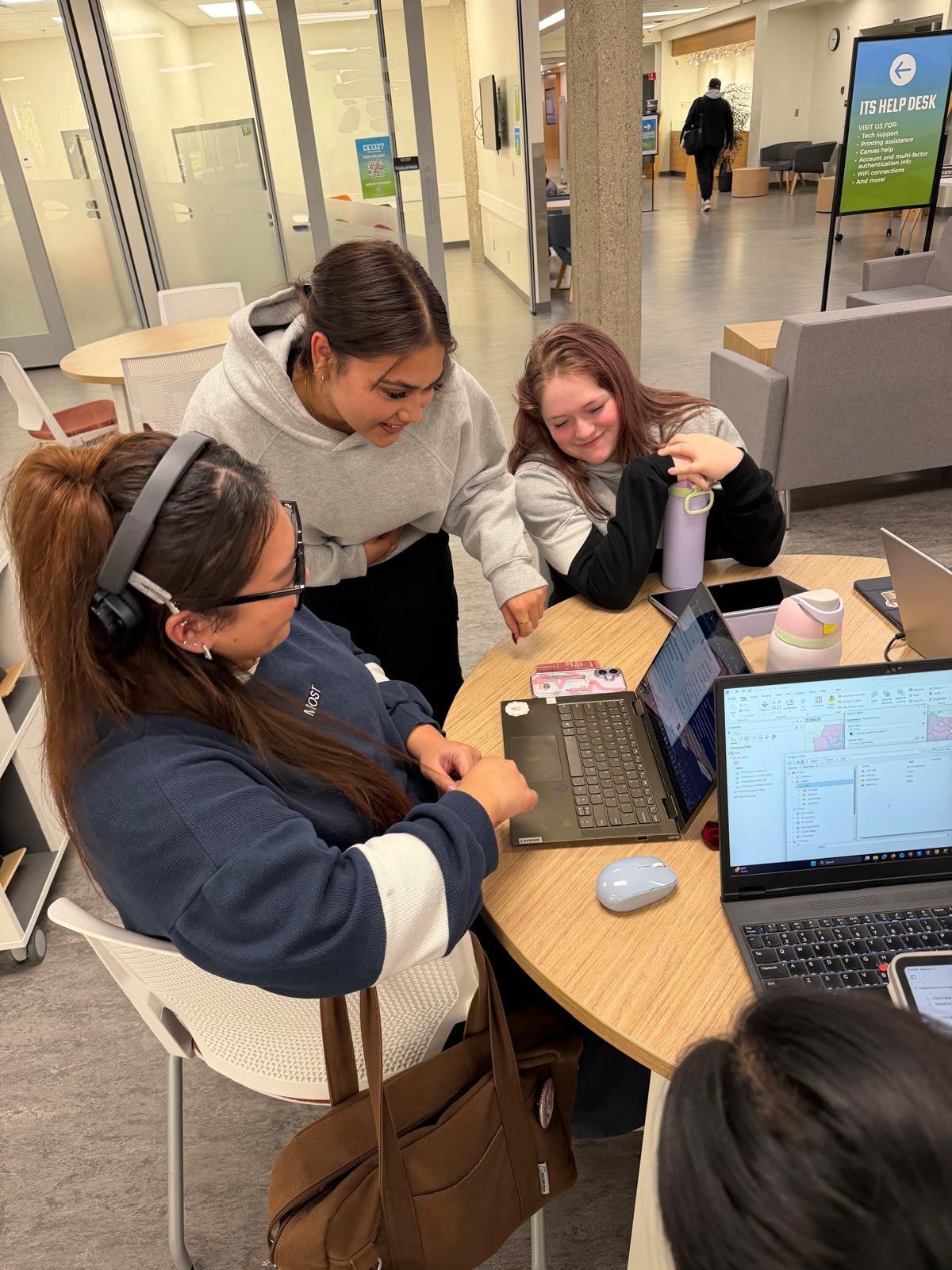
Lorne Atwood, an engineering instructor at the polytechnic assists a student. Engineering students can complete U of L core courses under the upcoming 2027 partnership. Photo by Mohammad AlDabak.
The two post-secondary institutions in Lethbridge are pooling their resources to provide a seamless transition from diploma programs to full professional degrees.
Under the proposed partnership for autumn 2027, engineering students at the University of Lethbridge will complete six core courses directly within the laboratories at the polytechnic, a move that would reshape academic pathways.
“In the past, if you wanted the degree, you had to go to Calgary or Edmonton,” engineering instructor Tobi Baugh said. “This allows us to collaborate rather than compete.”
Inside the computer-aided design (CAD) labs at Lethbridge Polytechnic, students sit side-by-side, adjusting digital blueprints. For many adult learners, this practical environment provides a fast track into Alberta’s thriving infrastructure sector.
Landis Charles Bell, 29, is a first-year student in the Civil Engineering Technology program. Following a work-related injury at his previous job, he chose this two-year program to change his career path.
For Bell, obtaining practical training close to home was a more logical choice than committing to a long-term university program.
“Being able to adjust a level or work in CAD, as opposed to reading a slideshow, makes all the difference,” Bell said. “In today’s job market, practical experience is almost more important than education credentials.”
For students like Bell, staying close to home is a priority. Yet, overcoming that geographical barrier has historically been a challenge for aspiring engineers in southern Alberta.
This model reflects the requirements of the local labour market. While companies need a small number of professional engineers to approve final stages, they rely heavily on certified technicians to carry out tasks such as field sampling, preparing engineering drawings and project management.
Baugh emphasized experience in the local industrial sector provides students at technical institutes a unique advantage, noting faculty members bring years of field experience into the classroom to illustrate how regional conditions influence design in real-world, practical applications.
This practical focus is what drew first-year student Francisco Luna Ceccaldi. Despite already holding a degree in philosophy and fine arts from the U of L. Sicaldi enrolled in the diploma program to gain direct entry into the construction field.
“Our instructors have real industry experience in Alberta,” Ceccaldi said. “This diploma gives us the practical skills companies are actually hiring for right now.”
For many learners balancing part-time jobs with family responsibilities, avoiding the need to relocate to a larger city removes a significant financial and logistical hurdle. By offering these advanced courses locally, students benefit from a smoother and more affordable academic journey.
Ceccaldi sees the upcoming 2027 pathway as a win-win for students wanting to balance employment with academic goals.
Retaining local talent has long been a top priority for the regional economy. Education leaders hope that providing a direct, seamless pathway linking local certificates to full academic degrees will encourage young professionals to build their careers and lives here in southern Alberta. As students work through their lab assignments, the future of engineering education in Lethbridge offers a clear path from lab benches directly into Alberta’s workforce.

Leave a Reply