
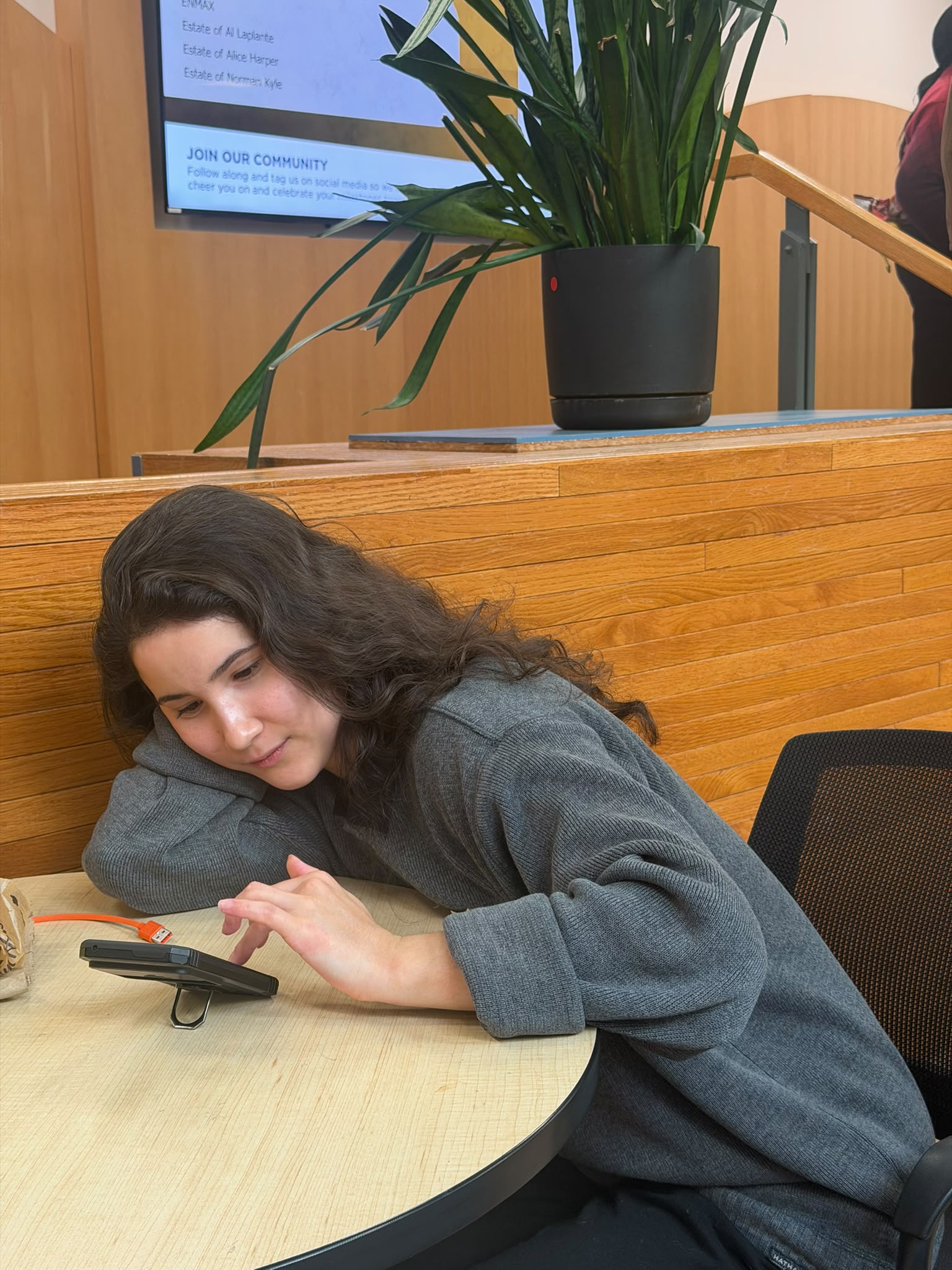
Social media for several young people, something that takes over a lot of people’s free time. Many young people spend several hours each day on social media watching videos, communicating with friends, creating content and more on platforms such as TikTok, Facebook, Instagram and Snapchat.
While social media can be great way to connect with people, there are also many challenges that come with excessive scrolling.
Few counsellors and students are concerned about the effects of social media on students’ concentration, sleep, mental health and real-life relationships.
A Lethbridge Polytechnic student Aiden Hoffman says he uses social media on average six to eight hours a day. He primarily uses Facebook and TikTok.
“Who doesn’t enjoy doomscrolling to pass the time when there’s nothing better to do?” Hoffman asked. Hoffman was only in Grade 6 when he first started using social media, Instagram was one of the first platforms he used. He says the online world is now a big part of his life and that he often spends more time on it than he originally intends to.
Counsellor Maya Ichikawa commented on the ways in which social media can influence the way
in which young people access information, communicate and develop interests.
The way in which social media allows people to connect with others across the globe is positive; however, the way in which it encourages users to spend more time looking at screens is also a concern.
The brain’s reward system can make it very difficult for people to put down their phones and stop scrolling.
“Scrolling fuels the brain’s reward system.” Ichikawa said.
Ichikawa said social media is structured for maximum engagement can be
compared to the way a slot machine is designed to keep a person playing.
She said even
though people start out intending to spend only a few minutes online, they get so many
small rewards that they keep scrolling.
The images that are shared by influencers online are often very selected to show only the
best moments of their life, the many vacations they take, the achievements they have had.
These images can create a very unrealistic view of life and lead to young people comparing
themselves to the others online.
People tend to post their wins more than their losses, “Ichikawa said.
There are many filters and the way to edit content online today. This can create a false
image of someone’s life, and make other people feel less than them. Also, the number of
likes, comments and followers on social media can create a sense of approval and
belonging for a user.
While Hoffman does not compare himself to the others online in terms of his lifestyle, he
does compare his clothing and personal style to that of others. He created content on
TikTok and earns money from it. He is often reminded by others to upload more content.
“I do content creation on TikTok and make money off it.” Hoffman said.
He explained that people regularly remind him to upload new content.
“I am very much so forced because I get bugged on a daily to post.” Hoffman said.
Hoffman said that although social media has not seriously affected his sleep and
academic performance.
Ichikawa explained that social media can take away from studying and interfere with
students’ time management. The social media platforms are designed to keep users
engaged and can make it difficult for students to return to schoolwork and other
responsibilities.
Ichikawa also described how screen use can affect sleep quality, specifically that blue
light from screens can interfere with the body’s natural sleep cycle and the production of
melatonin. Worrying about online activities, fear of missing out, and viewing
disturbing content online can also make difficult for people to relax before bed
Although social media has its disadvantages, Hoffman believes it provides more important
opportunities to connect with people around the world.
“You can see and connect with people across the entire world and continents and
countries.” Hoffman said.
However, he also noted that online there is lot of misinformation and even deepfakes and
more. He said that online social media is like a really bad game of telephone and that even
a small change can make the message completely different.
Ichikawa said that there are also many positive things about social media such as communication, networking, environmental awareness, activism and youth empowerment. However, she also said that too much social media can lead to loneliness, anxiety and other problems.
The counsellor and the student both agreed that finding balance between online and
offline activities is important for young people.
Hoffman suggested many ways for students
to spend more time outside and participate in sports, go for walk, go to the gym or find
other things to do instead of scrolling on social media.
“Go outside, go do something, find something productive, find a replacement for it if you
really want.” Hoffman said.
Ichikawa also suggested setting screen-time limits, taking regular breaks from screens and
establishing healthy routines for offline life.
She also suggested that young people pay
attention to how they feel when they are scrolling on social media and how they feel after
they put down their phone.
“You do have a choice. You can develop capacity and intention to set down the phone.”
Ichikawa said.
The ways in which social media is evolving will mean that there are many opportunities for
young people to enjoy the positive aspects of the online world while at the same time being
able to step away from screens and enjoy the real world.
In order to enjoy the many
positive aspects of social media, students must be aware of the ways in which they are
using social media and make the choice to use it in ways that are positive for them. Are you
using the social media or is social media using you?


Leave a Reply