
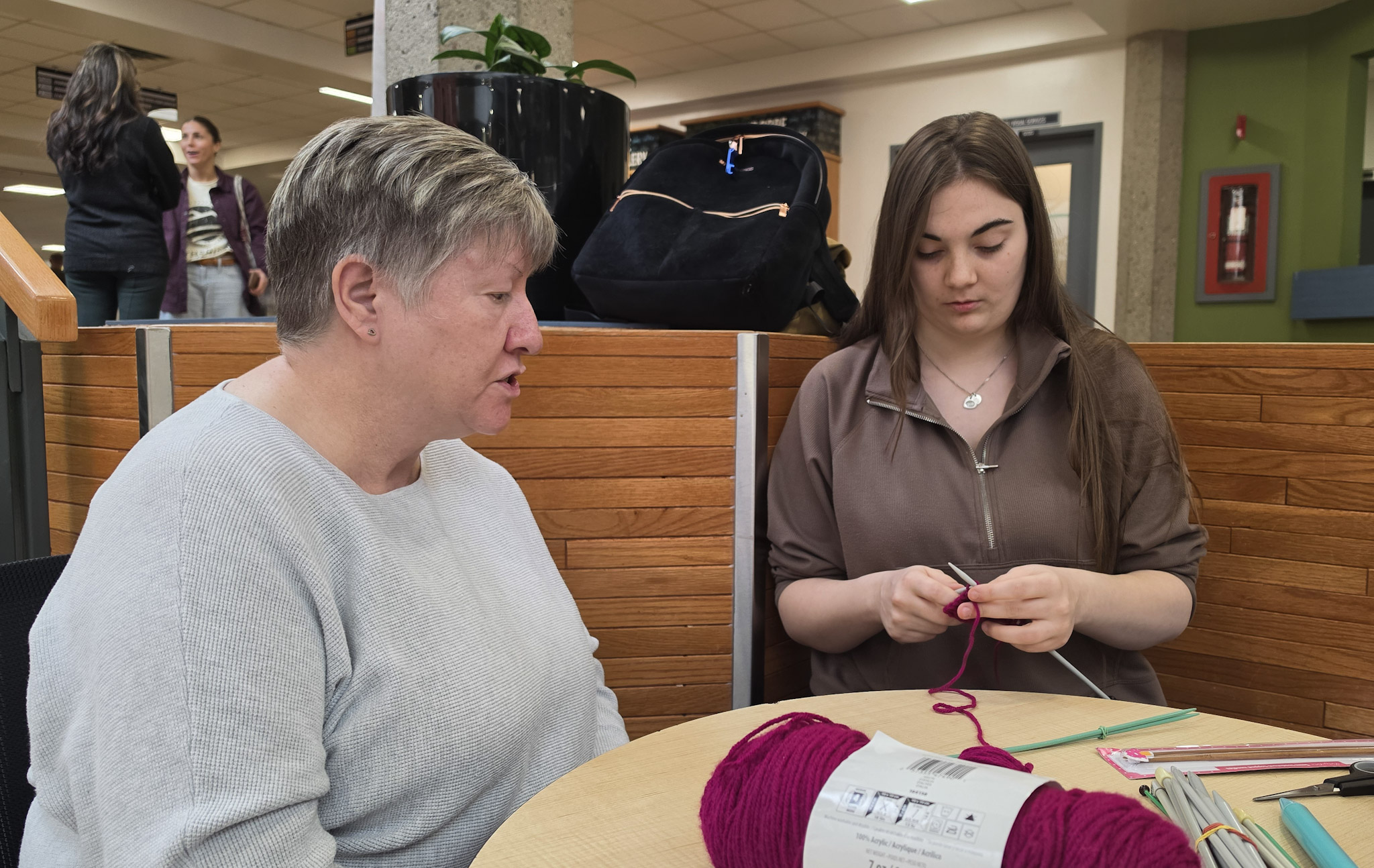
Michelle Montgomery teaches a polytechnic student how to knit. Photo by Meaghan Diek.
The winter weather changes more than the landscape around us. The sun sets before dinner is on the table, your 5 a.m. alarm is a little extra cruel and even the simple task of making your bed seems exhausting. Every winter, 15 per cent of Canadians battle Seasonal Affective Disorder which is a form of depression linked to seasonal changes in the year directly related to daylight shifts.
Lethbridge Polytechnic men’s volleyball coach, Greg Gibos, has rich expertise in psychology, leadership, and counselling. He says SAD is more about sunlight changes rather than seasons.
“I don’t think its so much of the season, a lot of it has to do with how much light we get. A lot of what we deal with when it comes to SAD is our athletes get up at 6:30 in the morning, they’re here all day for class, weightlifting, have practice from 5:30 to 7:30 and there will be days when they don’t see the sun.”
Gibos understands his athletes need to be exposed to sunlight in order to improve performance during the cooler months. Because sunlight affects much of the body’s physical processes, it’s important for you to get outdoors when the hours of sunlight shorten.
According to an article on Seasonal Affective disorder: an overview by Cheryl Zauderer published in the Mental Health Practice scholarly journal in 2015, “a decrease in exposure to sunlight has been shown to extend the production of the sleep-inducing ‘hormone of darkness’ or melatonin that functions to regulate sleep cycles. People experiencing SAD have elevated levels of melatonin that remain high until the spring, when there is more sunlight and the days become longer.”
The changes in the amount of sunlight we take in during the day deprive the body of the natural vitamins it needs. Getting outside during the winter is important for your sleep patterns, digestion and ultimately your mental health.
“Your sleep cycle is light dependant. If we’re moving that light than all of a sudden, we’re interrupting our circadian rhythm, and your body thinks it’s subjective night,” says Gibos.
He says it’s important that during the winter, students find time to be outside and focus on growing in outdoor hobbies to keep SAD away.
It’s important that especially during the winter months, students find intentional things to do outside of their regular schedule. Practicing mindfulness and finding enjoyable winter hobbies help protect your mental health and serve your physical needs as well. When you engage in hobbies during the winter it helps provide structure, boosts mood and counters the social withdrawal from being inside.
One of the faces at the snacks and smiles table at the polytechnic, Michele Montgomery, says knitting allows her to take her mind off some of the stressors of the day.

“It’s very calming. If I find I have something weighty on my mind, if I start crocheting or knitting, and immerse myself in the pattern, I can tend to set that aside yet still work through it in the back of my mind,” she says.
Knitting is a powerful cognitive workout that activates multiple brain regions simultaneously and triggers a relaxation response similar to deep meditation. While knitting is an inside hobby, it provides a social outlet for those who would rather stay inside during the colder months.
If the thought of knitting is mind numbing, there are so many more hobbies for you to try this winter. From crafting to cooking, it’s almost impossible for you to avoid trying something new.
Learning to cook a new dish is a great way to challenge your tastebuds while also leaving you with a sweet treat or savoury meal to share with friends and family. If you miss the joy of learning new things, you could study a subject you’ve always been curious about but never looked into.
It’s important to remember to include these indoor hobbies with your outdoor ones. Sledding, building a snowman, brisk walks, running, outdoor winter sports are all great ways to soak in the sunshine, soak in the vitamin D and develop core memories that last a lifetime. Listen to your body and remember sunlight is an import ant part of keeping your body healthy, both physically and mentally.

Leave a Reply